
What is Non-Destructive Testing?
Kiểm tra không phá hủy (NDT) là một loại kiểm tra được sử dụng để đánh giá tính chất của một vật liệu, thành phần hoặc hệ thống mà không gây hại tới sản phẩm¹². Đây là một công cụ quan trọng trong nhiều ngành công nghiệp, như hàng không vũ trụ, ô tô, xây dựng và sản xuất².
Có nhiều loại phương pháp NDT khác nhau, như:
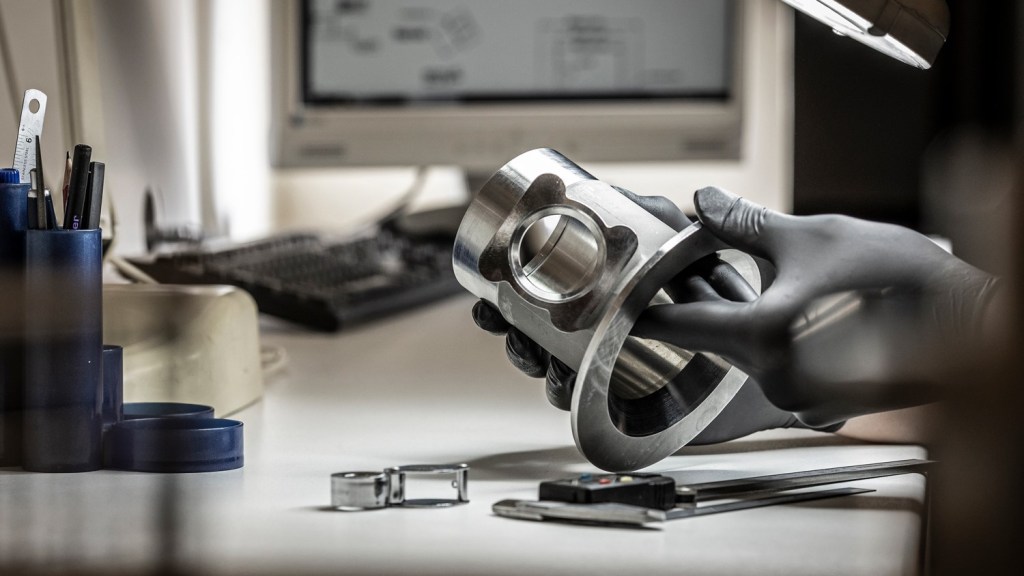
- Kiểm tra bằng mắt thường: Phương pháp đơn giản và phổ biến nhất của NDT, bao gồm việc kiểm tra bề mặt của một đối tượng bằng mắt thường hoặc bằng các thiết bị quang học¹³.
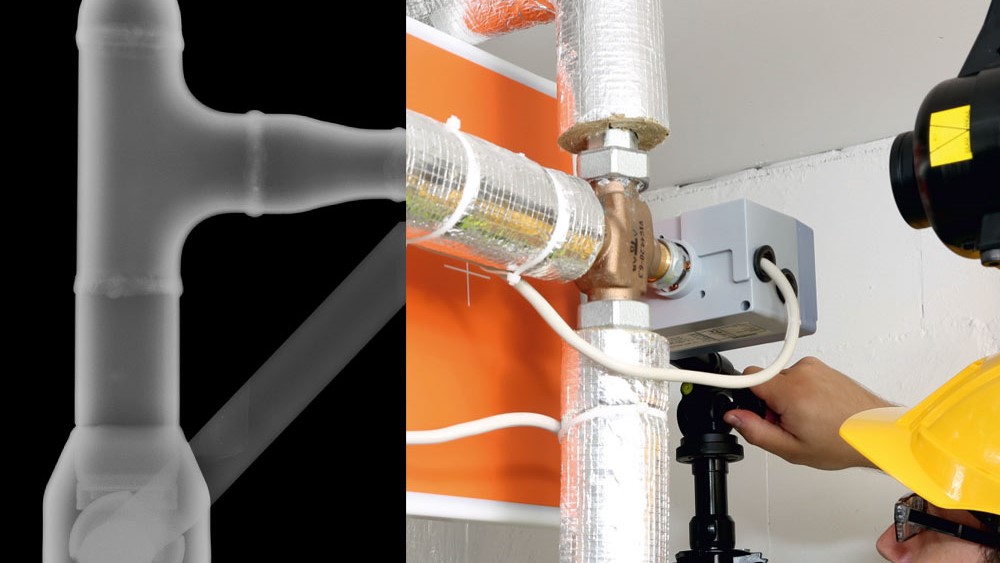
- Kiểm tra bức xạ: Phương pháp tạo ra hình ảnh của cấu trúc bên trong của một đối tượng bằng tia X hoặc tia gamma. Phương pháp này thường được sử dụng để tìm ra các khiếm khuyết hoặc đặc điểm ẩn trong vật liệu hoặc mối hàn⁴.
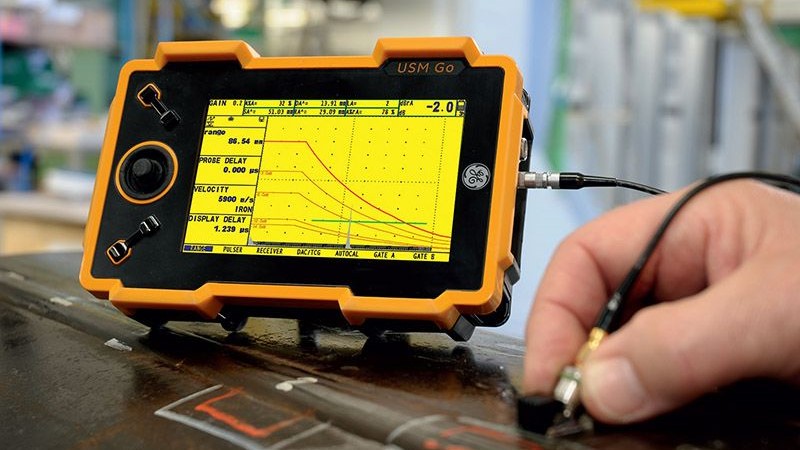
- Kiểm tra siêu âm: Phương pháp sử dụng sóng âm tần số cao để phát hiện lỗi hoặc đo độ dày của vật liệu. Phương pháp này được sử dụng rộng rãi để kiểm tra ống dẫn, bình áp lực và các thành phần máy bay¹³.
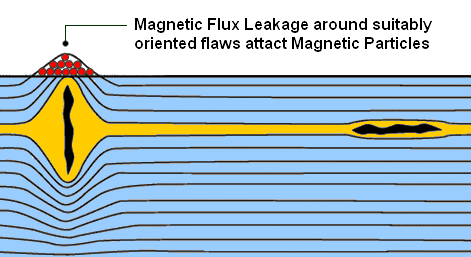
- Kiểm tra từ trường: Phương pháp sử dụng từ trường để phát hiện các khuyết tật bề mặt và gần bề mặt trong các vật liệu sắt từ. Phương pháp này được sử dụng rộng rãi trong kiểm tra vật đúc, rèn và các mối hàn¹³.
- Kiểm tra thẩm thấu: Phương pháp sử dụng chất nhuộm lỏng để làm lộ ra các vết nứt hoặc các bất liên tục khác trên bề mặt của các vật liệu không xốp. Phương pháp này phù hợp để kiểm tra kim loại, nhựa, gốm và thủy tinh¹³.

Non-destructive testing (NDT) is a type of testing that is used to evaluate the properties of a material, component, or system without causing damage¹². It is an essential tool in many industries, such as aerospace, automotive, construction, and manufacturing².
There are various types of NDT methods, such as:
- Visual inspection: The simplest and most common method of NDT, which involves examining the surface of an object with the naked eye or with optical devices¹³.
- Radiographic testing: A method that creates images of an object’s internal structure using X-rays or gamma rays. It is commonly used to find defects or hidden features within materials or welds⁴.
- Ultrasonic testing: A method that uses high-frequency sound waves to detect flaws or measure thickness in materials. It is widely used for inspecting pipelines, pressure vessels, and aircraft components¹³.
- Magnetic particle testing: A method that uses a magnetic field to detect surface and near-surface defects in ferromagnetic materials. It is often used for inspecting castings, forgings, and welds¹³.
- Penetrant testing: A method that uses a liquid dye to reveal cracks or other discontinuities on the surface of non-porous materials. It is suitable for inspecting metals, plastics, ceramics, and glass¹³.
Source:
(1) What is Non-Destructive Testing (NDT)? Methods and Definition. https://www.twi-global.com/technical-knowledge/faqs/what-is-non-destructive-testing.
(2) Non Destructive Testing Methods & Applications | SafetyCulture. https://safetyculture.com/topics/non-destructive-testing/.
(3) Nondestructive testing – Wikipedia. https://en.wikipedia.org/wiki/Nondestructive_testing.
(4) What Is Non-Destructive Testing NDT? Method, Types, Application. https://www.petrosync.com/blog/what-is-ndt/.
(5) 1,627 Non Destructive Test Images, Stock Photos & Vectors – Shutterstock. https://www.shutterstock.com/search/non-destructive-test.

 TTA Company
Leave a reply to toansk Cancel reply